Monday, November 10, 2014

Lesson 6: Symmetry Examples for Clearer Teaching

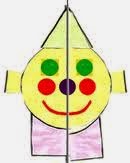
Here are some examples in the powerpoint I am using to get the first graders to understand the relevance of symmetry and it's value in everyday life.


This last example will be an awesome segway into their next project! I will be taking pictures on Tuesday for our lesson on Thursday!

Lesson Plan 6: Symmetry with Paint

Symmetry Lesson Plan (Painting with Reflections)

Subject Concepts
Art Concepts
    Content Covered:
      Use of balance, straight, zig-zag, and differentiating lines
     Content Covered:
      Fine motor skills, color effects, use of imaginative thinking, use of pressure and composition

     State Standards & Objectives      (USOE/UEN):
a.      Standard 1 Communicating science Objective 2c: Connecting ideas with reasons (evidence). 
b.     Standard 3 Objective 1a: Describe, classify, and communicate observations about the motion of objects, e.g., straight, zigzag, circular, curved, back‐and‐forth, and fast or slow
   State Standards & Objectives (USOE/UEN):
Integrated Core Objective 2c: Develop manipulative skills (e.g., cut, glue, throw, catch, kick, strike).


      Learning Outcomes:
    The student will be able to…   
    Identify varying shapes and lines and their effect on art as a whole. They will also be able to identify differences between varying pressures with hand movement in creating art.
     Learning Outcomes:
    The student will be able to…
Develop their fine motor skills and be able to identify symmetry and symmetrical balance through an artistic exercise that emphasizes composition and hand movement.

    Lesson Plan

1.     Set out cups of water and trays of paint at each table before class.
2.     Get symmetrical powerpoint working to display images on common symmetry the kids are probably already familiar with.
3.     Go over powerpoint and explain symmetry, reflections, mirroring, etc,.
4.     Have each child fold paper in half.
5.     Display on overhead and example of you creating a composition using the paint dots.
6.     Instruct children on importance of thickness of dots, lines, squigglys, etc,.
7.     Have the kids drop shapes and dots.
8.     Demonstrate folding over paper and “smashing” so that the paint is transferred easily.
9.     Display work to dry and clean up.
10.  Take pictures of kid’s faces and explain next art project coming up!
    Materials Needed:
·       Art construction paper
·       over head for display
·       pencils for each child
·       Paint in various colors at each tables
·       Paint brushes for each child
·       Water cups

Thursday, November 6, 2014

Lesson 5: Turkeys Gone Wild

I loved this next art lesson we did, and I think the kids did too. Mrs. Olsen showed me a variety of Thanksgiving books she had in her collection to draw from for an art lesson. We settled on "A Plump and Perky Turkey." The gist of the illustration is centered around a village searching for a Thanksgiving Turkey. They entice a turkey through beckoning him to become a judge for their turkey contest. The townsfolk all create models of turkeys with soap, rope, potatoes, camo, fabric, leaves, etc,. I read the book to the kids and then directed them to create their own turkeys from various materials (beans, pasta, pom poms, cotton balls, stickers, stickers). I had already created and copied a generic turkey cutout for the kids to build off of. They loved it! They were excited to take them home. :)
 They are so creative! I love how some of them used materials that resembled the bird itself, while others were much more abstract and imaginative!

 The kids are great about cleaning up if you REMIND them. haha!
They have learned a lot this year about sharing as we don't have enough glue for everyone!
I learned that giving the kids a model is good, but greatness in teaching art comes from showing less of your ideas and letting them create their own!

Tuesday, November 4, 2014

Lesson 5: A Plump and Perky Turkey Lesson Plan

A Plump and Perky Turkey Lesson Plan
Name of Art Scholar: Sunny Leavitt
Name of Teacher: Shellie Olsen

Subject Concepts
Art Concepts
    Content Covered:
      Answering questions about specific details in literature, describe characters, understand a moral in the story
     Content Covered:
      Fine motor skills, color effects, use of imaginative thinking

     State Standards & Objectives      (USOE/UEN):
Reading Literature Standard 1: Ask and answer questions about key details in a text.
Reading Literature Standard 3: Describe characters, settings, and major events in a story, using key details
   State Standards & Objectives (USOE/UEN):
Integrated Core Objective 3b: Express how colors, values, and sizes have been controlled in artworks to create mood, tell stories, or celebrate events.


      Learning Outcomes:
    The student will be able to…   
     Draw from a literary piece essential components such as character, setting, illustration techniques, plot, and moral
     Learning Outcomes:
    The student will be able to…
Develop their fine motor skills and create a turkey composition in which they have the freedom to depict a turkey from a variety of materials and art “scraps.”

    Lesson Plan

1.     Set out bowls of artistic scraps or material (ideas in materials section).
2.     Read “A Plump and Perky Turkey” by Teresa Bateman to children.
3.     Identify the basic storyline, characters, moral, humorous twist, and artistic components in the illustration.
4.     Expand on the wildly creative kinds of turkeys that were created.
5.     Have the kids glue down their own perky turkey cutout on a piece of art paper.
6.     Have them select materials to compose their turkeys with from various bowls of artistic objects around the classroom.
7.     Explain the importance of solid gluing and instruct them on the overhead as to how to glue.
8.     Clean up all materials when turkeys have been glued. Allow some of the students to share their work with the class.
    Materials Needed:
·       Art construction paper
·       over head for display
·       pencils for each child
·       Bowls of materials spread around the room with objects such as:
o   Pasta
o   Beans
o   Cotton balls
o   Sprinkles
o   Crepe paper
o   Pom poms
o   Googly eyes
o   Pipe cleaners